 News type


When Should I Replace my Brake Disc?
In everyday riding, the brake system is one of the most critical factors for ensuring road safety. However, many riders may feel uncertain about when to replace their brake discs, especially when noticing grooves or wavy patterns. Does this mean it's time to change the brake discs?
But don't worry—slight wavy patterns are usually a normal wear phenomenon and don't indicate damage. The wear rate of brake discs depends on several factors, including the rider's riding habits and the materials of the chosen brake discs and brake pads. Specifically, full-metal sintered brake pads, while offering excellent performance, tend to cause faster disc wear. This article will explain the reasons for replacing brake discs and the optimal time to do so, helping riders make the right decision.
Inspection and Maintenance Guidelines:
1. Reduced Braking Performance (without changing parts): If you notice a significant decline in braking performance, visually inspect the disc surface for abnormal wear or check if the brake pad's friction material is damaged or cracked. If any issues are found, replace the components immediately to avoid brake failure and accidents.
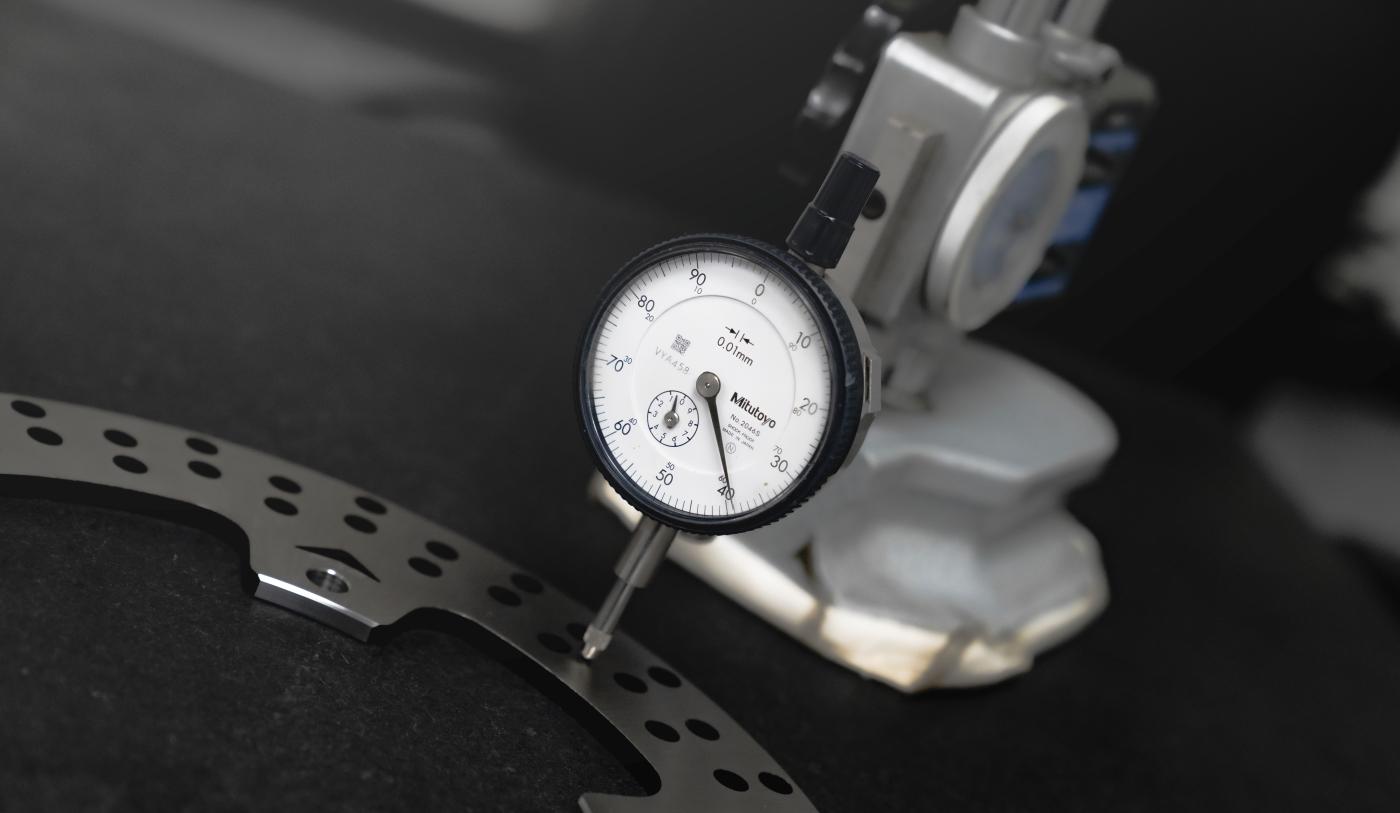
2. Regular Inspection: Regularly check the thickness of the brake disc, especially when changing brake pads. This will help you monitor wear and catch potential problems early. Brake discs usually come with a marked minimum wear thickness (MIN.TH.___mm). It's not only necessary to check the thickness of the outer edge, but also the thickness of the disc where it makes contact with the brake pads. Use a metal ruler from the center to the outer edge to inspect the surface for any uneven wear. If the minimum wear limit is reached, it's recommended to replace the brake disc immediately.
3. Brake System Maintenance: Perform regular maintenance on the brake system, including cleaning the surface of the brake disc, the brake pads, and checking the moisture content of the brake fluid, as well as ensuring that other brake system components are functioning properly. It is recommended to use a brake cleaner for this maintenance.
4. Brake Disc and Pad Replacement Together: When the brake disc shows severe wear (such as wavy grooves), the friction surface of the brake pads will also be affected. Therefore, it's advisable to replace both the disc and the pads simultaneously to ensure optimal braking performance.
Causes of Disc Wear and Solutions:
1. Uneven Brake Pad Wear:Uneven brake pad wear can cause grooves and irregular wear on the disc. Regular inspection and maintenance of the braking components can prevent abnormal disc wear.
2. Disc Material Issues: Choose certified and well-manufactured discs from reputable suppliers to avoid defects, improper heat treatment, or the use of substandard steel. Poor-quality materials can severely affect braking performance and even endanger safety. FAR ensures the highest standards by sourcing high-quality SUS420J2 stainless steel from Japan, giving riders peace of mind.
3. High-Temperature Deformation: If the disc surface becomes severely discolored due to excessive heat, it indicates improper wear. Brake pads that do not wear evenly will cause the disc to overheat and deform. In such cases, it's recommended to replace both the disc and the compatible brake pads to prevent brake failure.
4. External Factors: Regularly clean the disc surface to prevent damage from asphalt, dust, mud, or metal debris, which can accelerate wear and reduce braking force.
To ensure riding safety, it is important to regularly check the condition of your brake discs. If you notice reduced braking performance, replace the disc and pads promptly. Proper maintenance and timely replacement can ensure the reliability of your braking system, allowing you to ride with confidence and safety.